Reduction of Greenhouse Gas Emissions
CBG significantly reduces methane emissions from organic waste — a potent greenhouse gas. By capturing and utilizing this methane, CBG helps mitigate climate change and reduces the carbon footprint.
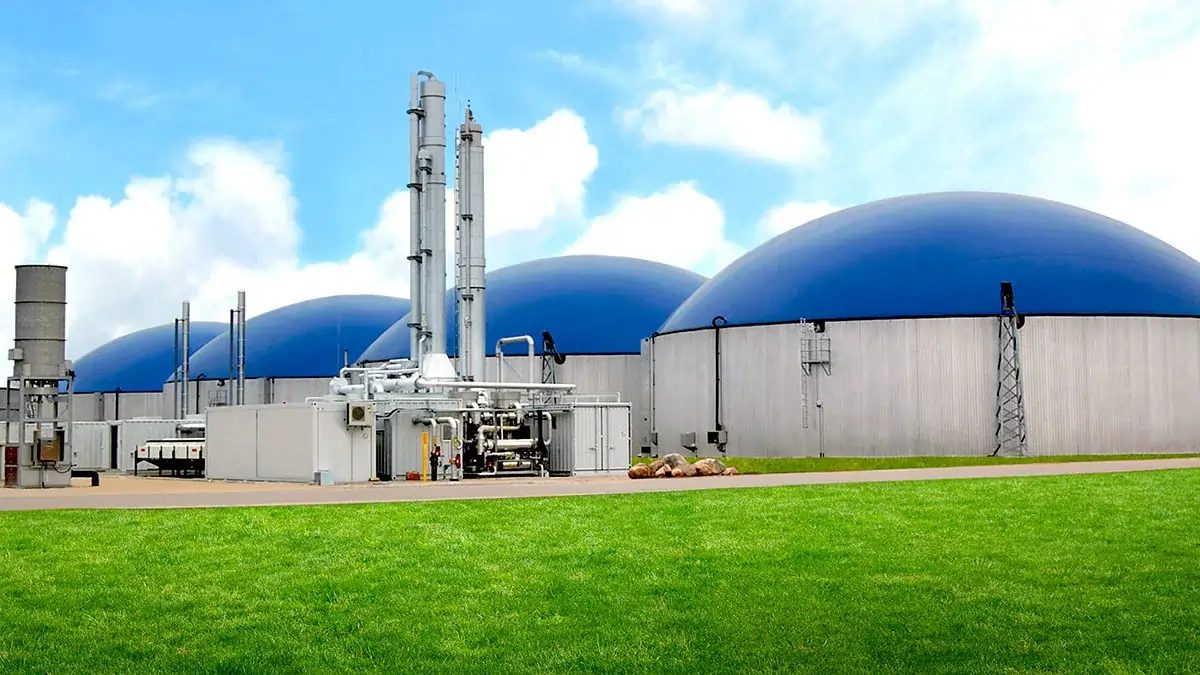
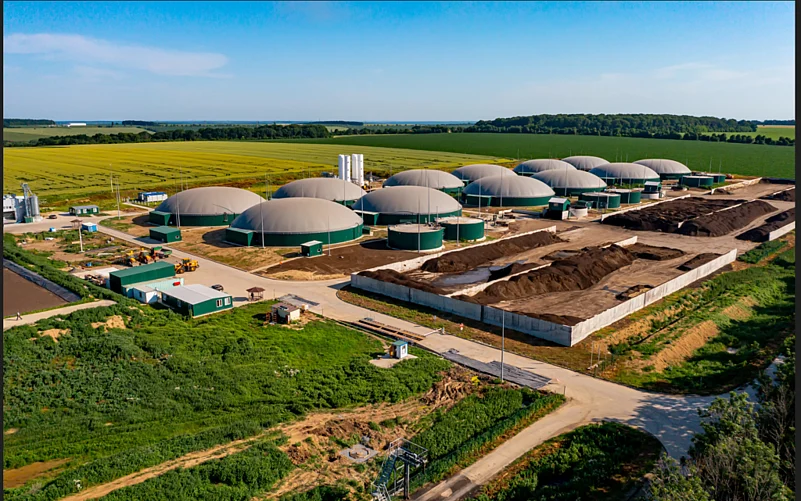
Bharat Energreen proudly introduces Compressed Biogas (CBG) as a sustainable energy solution that leverages organic waste to produce clean and renewable fuel.
CBG is derived through the anaerobic digestion of organic materials like agricultural residue, animal manure, and municipal waste. This innovative process not only addresses waste management challenges but also yields a versatile and eco-friendly fuel that finds application across various sectors — transportation, power generation, cooking, and industrial heating.
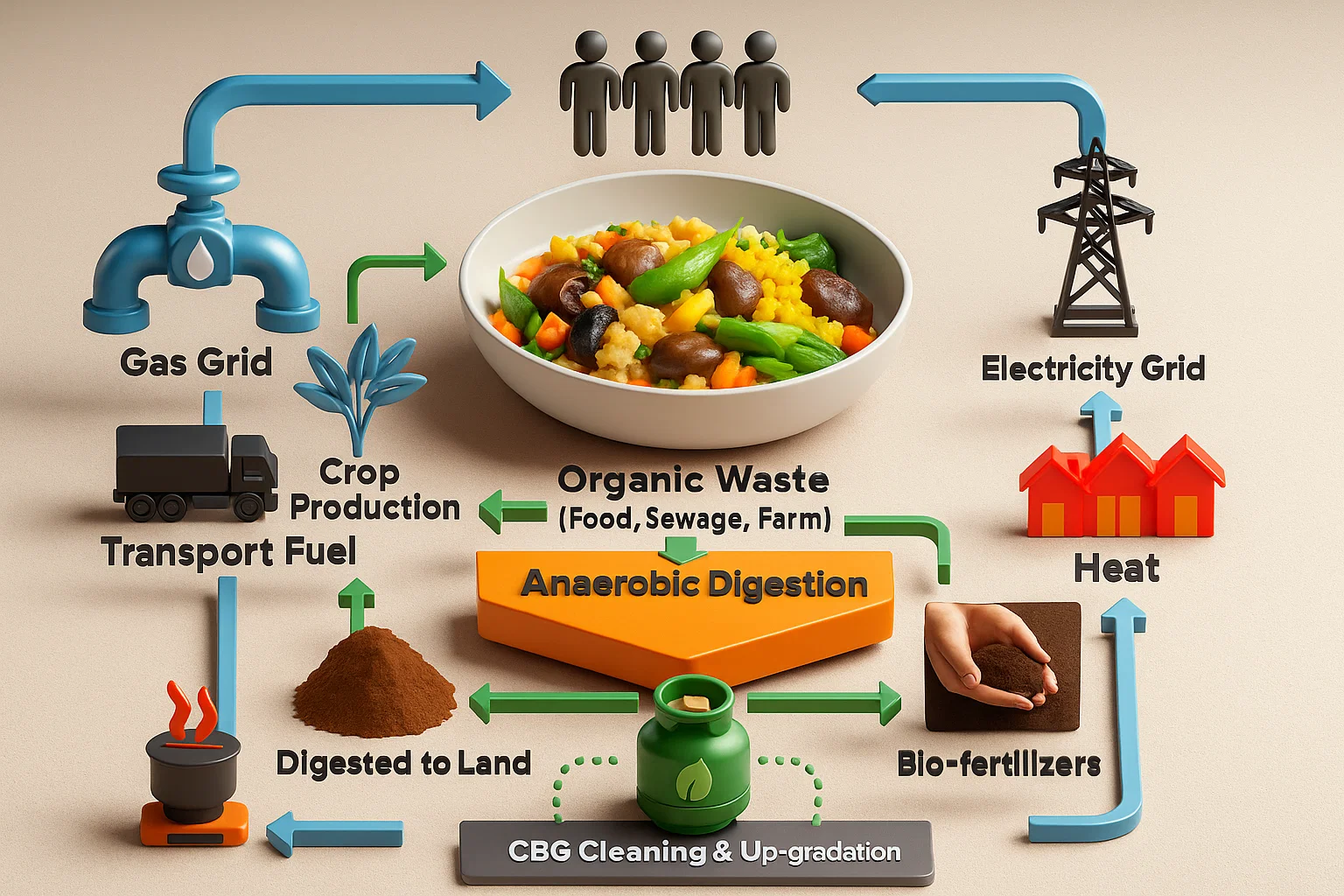
At Bharat Energreen, the CBG production process is carried out through a highly efficient and environmentally responsible approach.
Organic feedstock such as agricultural residue, animal waste, food waste, and biomass is first collected and pre-treated to remove impurities. This material is then fed into an anaerobic digester, where it naturally decomposes to produce raw biogas and digestate. The biogas undergoes advanced purification and upgrading to remove carbon dioxide, hydrogen sulfide, and moisture — resulting in high-quality CBG. It is then compressed and filled into cascades for safe storage and distribution to domestic, industrial, commercial, and CNG vehicle customers.
Choosing CBG from Bharat Energreen offers numerous benefits. Our CBG is produced sustainably, utilizing organic waste to reduce methane emissions and contribute to environmental conservation.
With a focus on energy independence, CBG promotes the use of local resources — fostering economic growth and job creation. Our commitment to quality ensures CBG from Bharat Energreen is a reliable and efficient fuel source, delivering a sustainable solution for a greener future.
Talk to an Expert
Six concrete benefits — environmental, economic, and social — that make CBG India's most strategic clean-fuel investment.
CBG significantly reduces methane emissions from organic waste — a potent greenhouse gas. By capturing and utilizing this methane, CBG helps mitigate climate change and reduces the carbon footprint.
Energreen's advanced renewable fuels release far fewer particulates, nitrogen oxides, and toxic emissions than fossil fuels — delivering measurable improvements in public health.
CBG production uses locally available organic waste resources, reducing dependence on imported fossil fuels and promoting genuine energy independence at the district level.
Energreen's renewable fuels help nations diversify their energy portfolio, strengthening energy security and shielding economies from volatile global fossil-fuel prices.
CBG projects create employment opportunities — particularly in rural areas where organic waste resources are abundant. This drives economic development and contributes to poverty alleviation.
CBG production offers a new revenue stream for farmers, waste management companies, and other stakeholders involved in the supply chain — converting waste into a paying asset.
At Bharat Energreen, we provide a comprehensive approach to help our clients install renewable-fuel stations — ensuring a seamless and successful transition to renewable energy.
Our planning and strategy process includes the following key steps:
Common questions about Compressed Biogas, its production, and its applications.
Compressed Biogas (CBG) is a renewable fuel produced through the anaerobic digestion of organic materials such as agricultural residue, animal manure, and municipal waste. This process breaks down the organic matter to produce methane-rich biogas, which is then compressed to form CBG.
CBG offers several environmental advantages, including the reduction of methane emissions from organic waste — a potent greenhouse gas. By capturing and utilizing methane as biogas, CBG helps mitigate climate change and contributes to improved air quality by producing fewer pollutants than conventional fuels.
CBG can be used in various applications including transportation, power generation, and cooking/heating. It can replace conventional fuels like diesel and petrol in vehicles (either in CNG vehicles or as a blend), be utilized in stationary engines to generate electricity, and substitute fossil fuels in cooking and heating appliances.
CBG production offers several economic benefits including job creation and revenue generation. CBG projects create employment opportunities — particularly in rural areas where organic waste is abundant. Utilizing local organic resources reduces dependence on imported fuels, contributing to energy security and promoting broader economic growth.
Tell us a bit about your needs — our team will reach out within 24 hours.